CIP, Allergen Control, and Documentation Considerations Around Enzyme-Assisted Dairy Processing
Enzyme-assisted processing can help whey plants improve conversion, control viscosity, support membrane performance, and create more consistent sensory outcomes. But the enzyme itself is only one part of the operating picture.
For a dairy whey processor, the real question is practical: how does an enzyme step fit into plant hygiene, allergen management, line clearance, and batch records without adding avoidable complexity?
As an enzyme supplier for whey processing, Seraflux works with plant teams that need more than a product code. They need application guidance that respects production realities: stainless systems, hold tubes, balance tanks, membrane loops, pasteurization constraints, cleaning windows, and audit-ready documentation.
Start with the process boundary
Before introducing or changing an enzyme-assisted step, define where the process begins and ends.
Typical boundary questions include:
- Is the enzyme dosed into sweet whey, acid whey, permeate, retentate, or a formulated dairy stream?
- Is the enzyme used before concentration, before membrane filtration, during hydrolysis, or in a dedicated side stream?
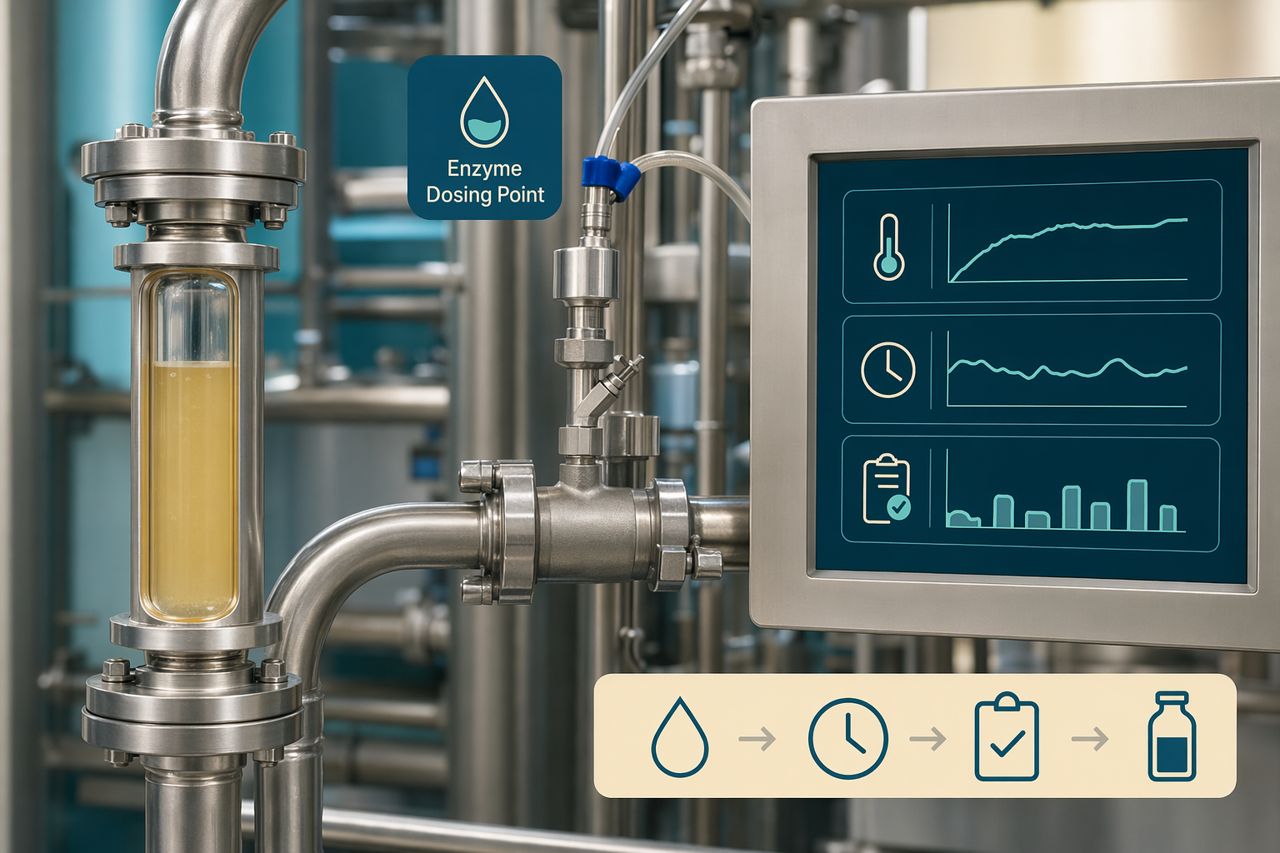
- Which tanks, pumps, valves, hoses, dosing points, and instruments contact the enzyme-treated material?
- Is the downstream product sold as an ingredient, dried powder, concentrate, nutritional base, or further-processed dairy input?
- Are any shared lines used for milk, whey, lactose-reduced products, or other allergen-relevant materials?
This boundary map is the starting point for hygiene review, allergen assessment, and documentation. Without it, cleaning validation and batch traceability become harder than they need to be.
Clean-in-place considerations for enzyme-assisted whey processing
Enzymes are typically used at low addition rates, but they can still influence how a line behaves. The main concerns are not dramatic. They are operational: residue control, rinse behavior, surface contact, and whether the enzyme step changes the load entering the cleaning cycle.
Review the soil profile, not just the ingredient list
In whey processing, the cleaning challenge is rarely one compound. It is the combined soil from proteins, lactose, minerals, fat traces, process aids, and heat history.
An enzyme-assisted step may affect:
- Protein breakdown patterns
- Viscosity during transfer or holding
- Foaming tendency in some streams
- Membrane feed behavior
- Heat exchanger fouling profile
- Residue characteristics after concentration or drying
The clean-in-place program should be reviewed against the actual stream and contact surfaces, not assumed from the enzyme alone.
Confirm compatibility with the existing cleaning sequence
Most whey plants already run structured alkaline, acid, rinse, and sanitizing routines. When adding an enzyme step, process teams should confirm whether the current sequence still delivers the required line condition.
Key checks include:
- Pre-rinse effectiveness after enzyme-treated whey
- Temperature and concentration windows used in alkaline wash
- Acid wash relevance for mineral load and scaling
- Conductivity return to baseline during final rinse
- Visual inspection points where available
- Swab or analytical checks defined by the site quality plan
- Any hold time before cleaning that could change residue behavior
The goal is not to over-clean. The goal is to clean with confidence, within the available production window.
Allergen control: treat enzyme use as part of the full dairy risk map
For dairy whey processors, the principal allergen context is already clear: milk-derived material is present. Enzyme use does not remove the need to control milk allergen risk, and it should not blur product identity or line status.
Where allergen complexity can increase is in shared assets, co-processing, rework handling, and label claims.
Questions for quality and operations teams
Before implementation, align on these points:
- Is the enzyme preparation suitable for the intended dairy application and regional regulatory position?
- Does the supplier provide allergen, origin, and composition documentation required by the site?
- Are any carrier or formulation components relevant to the plant allergen matrix?
- Are enzyme-treated and non-treated streams clearly identified in batching and storage?
- Are shared tanks or transfer lines released according to the plant’s allergen control plan?
- Does the finished product specification require declaration, process disclosure, or customer notification?
For many whey plants, the enzyme step fits cleanly within existing dairy allergen controls. But that conclusion should be documented, not assumed.
Documentation that supports audits and customer confidence
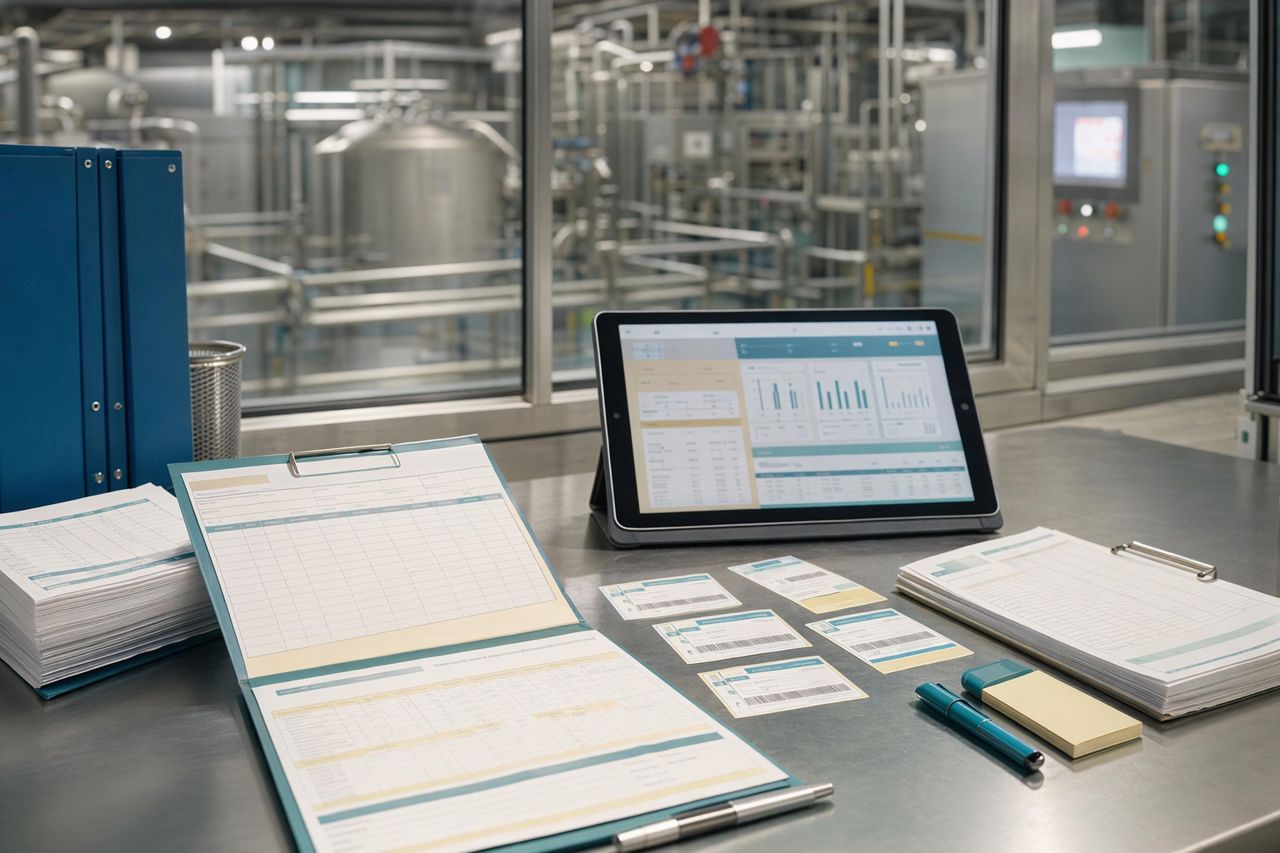
A well-run enzyme program should generate records that are useful to operators, quality teams, and commercial customers. Documentation should be specific enough to support traceability but simple enough to survive real production schedules.
Core documents to maintain
Common documentation packages may include:
- Product specification and intended application notes
- Safety data sheet and handling guidance
- Allergen statement
- Country-of-origin or source information where required
- Regulatory suitability statement for the target market
- Lot traceability and certificate documentation
- Storage and shelf-life guidance
- Change notification process
- Technical support contact path
Seraflux supports B2B buyers with documentation aligned to industrial use, not lab curiosity. The emphasis is practical: what the plant needs to receive, store, dose, document, and release product with confidence.
Batch records: make the enzyme step visible
If an enzyme is added during whey processing, the batch record should make that step clear. It should not be hidden in operator notes or treated as a casual process adjustment.
Useful batch record fields include:
- Enzyme product name and internal material code
- Supplier lot number
- Receiving lot and inventory reference
- Addition point
- Addition time
- Target process temperature range
- Hold or contact time target
- Agitation or recirculation status
- Deviation notes if the process moved outside approved conditions
- Operator and quality sign-off points where required
This level of visibility helps protect product consistency, supports investigations, and makes customer audits more efficient.
Change control: when a small change is not small
A change in enzyme product, formulation, addition point, or process timing can affect more than conversion. It may affect cleaning, labeling assessment, sensory profile, membrane performance, or downstream customer specifications.
Change control should be triggered when there is a change to:
- Enzyme type or supplier
- Formulation, carrier, or declared composition
- Dosing location
- Contact time or temperature window
- Product stream or finished application
- Cleaning program after the enzyme step
- Shared equipment use
- Customer specification or claim position
This does not mean every change is difficult. It means each change should be assessed against the right operating risks.
Operator training matters
The best documentation package still depends on the people running the line. Operators should understand the purpose of the enzyme step, the approved handling method, the process window, and the cleaning expectations after use.
Training should cover:
- Where the enzyme is stored
- How it is identified before use
- Where it is added
- What process conditions matter
- What to do if addition is delayed or missed
- How to record the step
- How the line is cleaned and released afterward
Clear training reduces batch variation and prevents the enzyme from becoming an informal workaround instead of a controlled process tool.
Supplier support should connect technical performance with plant compliance
A strong enzyme supplier for whey processing should be able to discuss both performance and implementation. Conversion targets, viscosity control, throughput, membrane behavior, and sensory impact are important. So are clean-in-place review, allergen documentation, and change control support.
Seraflux works with dairy whey processors that need plant-ready enzyme guidance. We help teams evaluate how an enzyme step fits into the operating window, how it should be documented, and what information is needed for internal approval and customer confidence.
Practical implementation checklist
Use this checklist before introducing or modifying an enzyme-assisted dairy process:
- Define the process stream and equipment boundary
- Confirm intended product application and market requirements
- Review supplier documentation for allergen and regulatory suitability
- Map the enzyme contact surfaces
- Review clean-in-place effectiveness after the enzyme-treated stream
- Confirm batch record fields and lot traceability
- Train operators on addition, handling, and deviation response
- Assess whether labels, customer specs, or technical sheets are affected
- Establish change notification expectations with the supplier
- Run the first production review with operations, quality, and technical support present
A controlled enzyme step is easier to scale
Enzyme-assisted whey processing can deliver meaningful plant value when it is introduced with discipline. The strongest programs combine technical targets with clear hygiene review, allergen control, and documentation.
If your team is evaluating an enzyme step for whey processing, Seraflux can help review the application, operating conditions, and documentation requirements before scale-up.
Request a quote through the on-site form to discuss your whey stream, process target, and implementation requirements.